


CNC turning is a computer-controlled machining process used to manufacture precise parts by rotating a workpiece while a cutting tool removes material. It is widely used for producing cylindrical, round, and rotational components with consistent dimensions.
From shafts and bushings to threaded components and precision machine parts, cnc turning can be used for a wide range of industrial manufacturing applications.
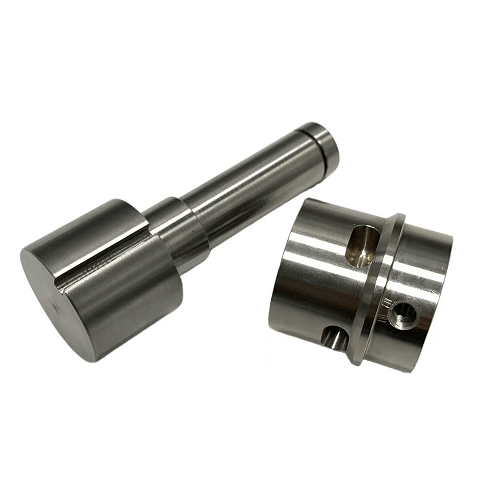
How Does CNC Turning Work?
During CNC turning, the workpiece is securely held in a chuck or other workholding device and rotates at a controlled speed. A cutting tool moves along the workpiece according to programmed instructions to remove material.
Depending on the part design, CNC turning can perform operations such as turning, facing, threading, grooving, boring, and drilling.
What Parts Is CNC Turning Used For?
CNC turning is particularly suitable for parts with round or rotational geometries. Common examples include:
Shafts
Pins
Bushings
Sleeves
Spacers
Threaded components
Connectors
Rotational machine parts
Precision mechanical components
What Industries Use CNC Turning?
CNC turning is used across many industries because it can produce repeatable and dimensionally consistent components.
Automotive Industry
CNC turning is used to manufacture shafts, bushings, pins, fittings, and other precision automotive components.
Industrial Machinery
Machinery manufacturers use turned parts for mechanical assemblies, drive systems, fixtures, and replacement components.
Electronics
Small turned components can be used for connectors, housings, shafts, spacers, and other precision electronic parts.
Medical Equipment
Precision CNC Turning can produce small metal components used in medical equipment and instruments where dimensional consistency is important.
Automation Equipment
Automation systems often require custom shafts, pins, bushings, rollers, and other rotational components that can be manufactured using CNC turning.
What Materials Can Be CNC Turned?
The suitable material depends on the machine, tooling, part design, and required specifications. Common CNC turning materials include:
Aluminum alloys
Stainless steel
Carbon steel
Copper
Brass
Engineering plastics
Material selection should consider mechanical strength, corrosion resistance, machinability, operating temperature, and application requirements.
What Operations Can CNC Turning Perform?
A CNC turning machine can perform several machining operations depending on its configuration and tooling.
| Operation | Purpose |
|---|---|
| Turning | Reduces the outside diameter of the workpiece |
| Facing | Creates a flat end surface |
| Threading | Creates internal or external threads |
| Grooving | Creates grooves or recesses |
| Boring | Enlarges or finishes an existing hole |
| Drilling | Creates holes in the workpiece |
Why Use CNC Turning for Precision Parts?
One of the main advantages of CNC turning is its ability to produce consistent parts according to programmed dimensions. Once the machining process has been properly set up, the same program can be used to manufacture multiple parts with repeatable results.
CNC turning can also reduce manual intervention and support efficient production of both prototypes and larger production runs.
Is CNC Turning Suitable for Custom Parts?
Yes. CNC turning is widely used for custom CNC machining because the machining program can be developed according to the customer's drawings and specifications.
For custom turned parts, manufacturers typically need information such as the part drawing or 3D CAD file, material, quantity, dimensional tolerances, surface finish, and other technical requirements.
Conclusion
CNC turning is mainly used to manufacture cylindrical and rotational precision parts. Its applications include shafts, pins, bushings, sleeves, threaded components, connectors, and other mechanical parts.
With suitable equipment, tooling, materials, and machining parameters, CNC turning can provide an efficient solution for producing custom precision components for different industrial applications.