


CNC cutting is a computer-controlled manufacturing process used to cut, shape, or machine materials according to programmed design instructions. It is widely used in metal fabrication, automotive manufacturing, aerospace, electronics, furniture production, and industrial equipment manufacturing.
By automating tool movement and cutting paths, CNC technology helps manufacturers produce consistent parts, repeat complex operations, and reduce dependence on manual cutting. The appropriate process depends on the material, part geometry, required accuracy, production volume, and surface finish.
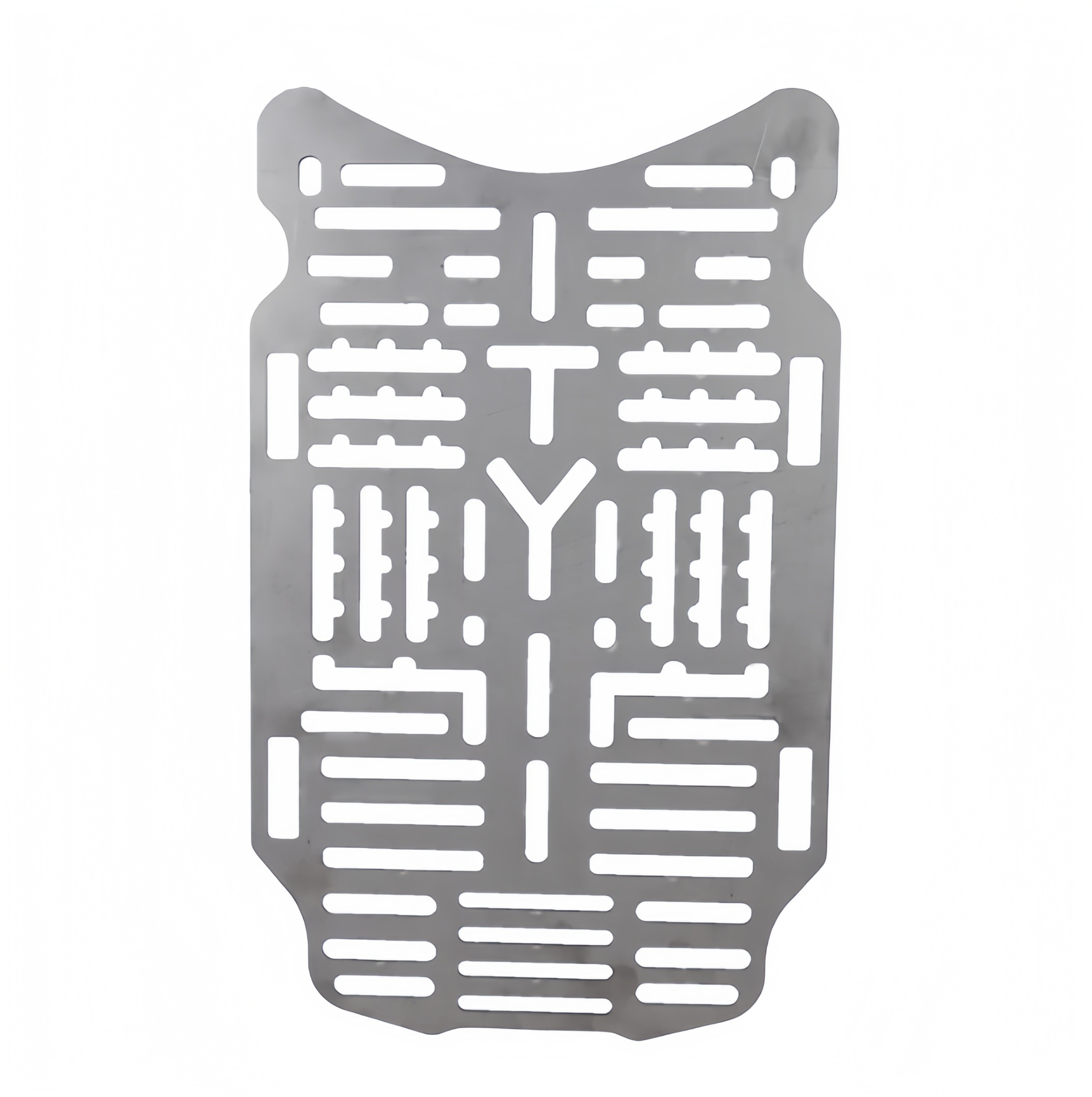
What Is CNC Cutting?
CNC stands for Computer Numerical Control. CNC cutting uses a programmed computer system to control a machine's movement and cutting operations. Depending on the equipment, the cutting tool may be a rotating cutter, laser beam, plasma torch, or high-pressure waterjet.
The term CNC cutting covers several manufacturing methods rather than one specific technology. Some systems remove material mechanically, while others use thermal energy or high-pressure fluid to separate material along a programmed path.
CNC cutting is often used to manufacture flat profiles, brackets, panels, enclosures, machine components, and other custom parts. More advanced CNC machining systems can also produce slots, pockets, holes, contours, and complex three-dimensional features.
How Does the CNC Cutting Process Work?
1. Create a CAD Design
The process starts with a digital design created using computer-aided design (CAD) software. The design defines the part's dimensions, shape, features, and other manufacturing requirements.
Depending on the cutting method, the design file may contain a two-dimensional profile or a three-dimensional model. Accurate dimensions and suitable geometry help reduce production errors and unnecessary material waste.
2. Generate the Machine Instructions
The CAD design is prepared for manufacturing using computer-aided manufacturing (CAM) software or other machine-specific programming tools. The software generates toolpaths and machine instructions, which may include G-code.
These instructions define the cutting path, movement, feed rate, spindle speed where applicable, and other operating parameters. The settings must be appropriate for the material, tool, machine, and required finish.
3. Prepare the Machine and Material
Before cutting begins, the operator loads and secures the workpiece, checks the machine setup, and selects the appropriate cutting tool or process settings. The material's position must be established accurately so that the programmed cutting path aligns with the intended part geometry.
Proper setup is important for dimensional accuracy, repeatability, and safe operation.
4. Perform the Cutting Operation
The CNC machine follows the programmed instructions to cut or machine the workpiece. Depending on the equipment, the operation may involve mechanical cutting, Laser Cutting, plasma cutting, or waterjet cutting.
Automated movement enables the machine to reproduce complex shapes and repeat the same cutting sequence across multiple parts. Operators may still need to monitor the process and intervene when required.
5. Inspect and Finish the Parts
After cutting, parts may require inspection, deburring, cleaning, sanding, or other finishing operations. The necessary steps depend on the material, cutting method, edge quality, and final application.
Dimensional inspection helps verify that the finished parts meet the specified tolerances and design requirements.
What Are the Main Types of CNC Cutting?
1. CNC Laser Cutting
CNC laser cutting uses a focused laser beam to cut material along a programmed path. It is widely used for sheet metal profiles, intricate contours, and detailed designs where speed and precision are important.
Fiber lasers are commonly used for metal processing, while CO2 lasers are suitable for certain nonmetallic materials, depending on the equipment and material specifications.
2. CNC Plasma Cutting
CNC plasma cutting uses an electrically conductive, high-temperature plasma arc to cut electrically conductive materials, particularly metal plates. It is often selected for structural steel components, fabrication work, and applications involving relatively thick metal sections.
Its suitability depends on the required edge quality, material thickness, and dimensional tolerance.
3. CNC Waterjet Cutting
CNC waterjet cutting uses a high-pressure stream of water, sometimes mixed with abrasive particles, to cut material. Because it does not rely on a thermal cutting process, it is useful when heat-related changes to the workpiece need to be avoided.
Waterjet systems can process a range of materials, including metals, composites, stone, and selected plastics, subject to machine capability and material requirements.
4. CNC Routing
CNC routing uses a rotating cutting tool to remove material along programmed paths. It is commonly used for wood, plastic sheets, composites, signage, furniture components, and panel fabrication.
Depending on the machine configuration, routing can create profiles, grooves, pockets, and other features that are difficult to produce using simple straight-line cutting.
5. Cnc Milling and Turning
CNC milling uses rotating cutting tools to remove material from a workpiece, making it suitable for slots, pockets, holes, contours, and complex component geometries. CNC turning rotates the workpiece while a cutting tool removes material, making it particularly suitable for cylindrical parts.
Although milling and turning are often described as CNC machining operations rather than sheet-cutting methods, they are important CNC manufacturing processes for producing precision components.
What Materials Can CNC Cutting Process?
The materials suitable for CNC cutting depend on the machine technology and cutting tool. Common material groups include:
Metals: Aluminum, carbon steel, stainless steel, and other compatible alloys.
Plastics: Acrylic, engineering plastics, and selected plastic sheets or blocks.
Wood and wood-based panels: Plywood, MDF, and other suitable materials for CNC routing.
Composites: Selected fiber-reinforced and industrial composite materials.
Other materials: Stone, rubber, and certain specialty materials when supported by the selected process.
Not every CNC machine can process every material. Buyers should confirm machine compatibility, material thickness, workpiece dimensions, and any special processing requirements before selecting a cutting method.
What Are the Advantages of CNC Cutting?
Repeatability: Programmed toolpaths help produce consistent parts across production runs.
Design flexibility: CNC systems can follow complex contours and detailed geometries.
Process automation: Automated movement reduces the need for continuous manual control of the cutting path.
Production efficiency: Suitable CNC processes can shorten cycle times and support higher-volume production.
Digital design integration: CAD and CAM workflows help connect product design with manufacturing.
Reduced manual variation: Controlled cutting operations can reduce inconsistencies associated with manual cutting.
Actual performance depends on machine capability, programming quality, material properties, operator experience, and production conditions.
Common Applications of CNC Cutting
Automotive Manufacturing
CNC cutting and machining are used to produce brackets, panels, fixtures, prototypes, and other automotive components.
Aerospace and Aviation
Suitable CNC processes support the production of selected structural parts, panels, fixtures, and precision components where material specifications and dimensional requirements are tightly controlled.
Electronics and Electrical Equipment
CNC cutting is used to manufacture equipment enclosures, mounting plates, control panels, brackets, and other components for electronic and electrical systems.
Industrial Machinery
Manufacturers use CNC cutting and machining to produce machine covers, mounting components, tooling plates, guards, and custom parts for industrial equipment.
Furniture and Signage
CNC routers and compatible cutting systems are used to produce furniture panels, decorative shapes, lettering, display components, and custom signage.
How to Choose the Right CNC Cutting Method
Before selecting a CNC cutting process, evaluate the following factors:
Material type: Confirm that the process is compatible with the material.
Material thickness: Check the machine's cutting capacity and the expected edge quality.
Part geometry: Determine whether the design requires flat profiles, internal features, pockets, or three-dimensional machining.
Dimensional tolerance: Match the machine's capabilities to the part's functional requirements.
Surface finish: Consider burrs, heat effects, edge quality, and post-processing needs.
Production volume: Evaluate setup time, cycle time, and repeatability for the intended order quantity.
Total cost: Include material use, machine time, tooling, finishing, inspection, and handling.
FAQ About CNC Cutting
Is CNC cutting the same as CNC machining?
Not exactly. CNC cutting generally refers to cutting material along a programmed path, while CNC machining can also include milling, turning, drilling, and other material-removal operations. The terms overlap depending on the manufacturing context.
Is CNC cutting suitable for mass production?
Yes. CNC cutting can support mass production when the machine, process settings, material supply, and inspection procedures are properly configured. Its repeatability makes it useful for manufacturing consistent parts in repeated batches.
What is the difference between CNC cutting and manual cutting?
CNC cutting follows programmed instructions to control machine movement, while manual cutting relies more heavily on operator control. CNC processes are generally advantageous for repeatable parts and complex geometries, although simple manual operations may be more practical for some one-off tasks.
How can CNC cutting accuracy be improved?
Accuracy can be improved through suitable machine selection, correct workpiece positioning, appropriate tooling and process parameters, stable material fixturing, and regular dimensional inspection.
Conclusion
CNC cutting is a versatile manufacturing approach that combines digital design, automated machine control, and different cutting technologies. From sheet metal profiles to routed panels and precision-machined components, the appropriate process depends on the material, geometry, tolerance, finish, and production requirements.
By evaluating these factors before production, manufacturers and buyers can select a suitable CNC cutting method and develop a more efficient manufacturing process.