In modern manufacturing,industries such as medical,aerospace,electronics,and automotive increasingly require components with smaller dimensions,complex designs,and extremely tight tolerances.Traditional machining methods may face challenges when producing miniature parts or components with intricate geometries.
This is where Swiss turning provides a powerful solution.Also known as Swiss CNC machining,this advanced manufacturing process is designed to produce highly precise parts with excellent stability,efficiency,and repeatability.
From reducing machining errors to improving production efficiency,Swiss turning offers significant advantages for manufacturers seeking high-quality precision components.
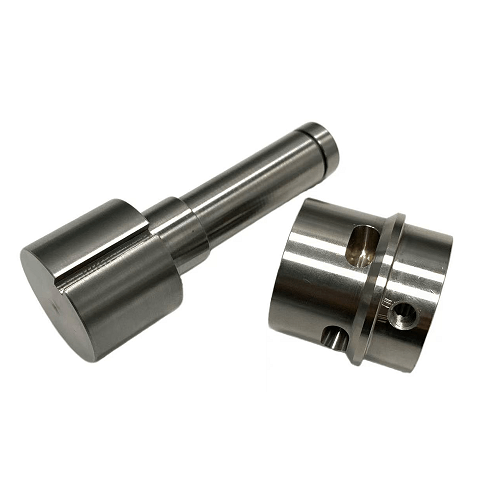
What Is Swiss Turning?
Swiss turning is a specialized CNC machining process that uses a sliding headstock and guide bushing system to support the workpiece during machining.
Unlike conventional CNC turning,where the material is held mainly by a chuck,Swiss CNC machines support the material close to the cutting area.This unique design minimizes vibration and improves machining accuracy,especially when producing small-diameter and long components.
Originally developed for manufacturing precision watch parts,Swiss turning has evolved into an essential technology for producing complex components across various industries.
Top Advantages of Swiss Turning for Precision Manufacturing
1.Exceptional Precision and Tight Tolerance Control
One of the greatest benefits of precision Swiss machining is its ability to achieve extremely high accuracy.
The guide bushing system keeps the material stable during cutting,reducing deflection and vibration.This allows manufacturers to produce components with tight dimensional tolerances and consistent quality.
Swiss turning is especially suitable for applications where even small errors can affect product performance,such as:
Medical implants
Surgical instruments
Aerospace components
Electronic connectors
Micro mechanical parts
For industries requiring strict quality standards,Swiss CNC machining provides reliable precision performance.
2.Excellent Stability for Small and Long Parts
Machining small and slender components can be challenging because vibration may affect accuracy and surface finish.
Swiss turning solves this problem by supporting the workpiece close to the cutting tool.The reduced distance between the support point and cutting area improves rigidity and minimizes material movement.
As a result,manufacturers can achieve:
This makes Swiss turning ideal for producing long,thin,and delicate components.
3.Efficient Production of Complex Components
Modern Swiss cnc turning machines are capable of performing multiple operations in one setup,including:
Turning
Milling
Drilling
Threading
Grooving
Tapping
By combining several processes into one machine,manufacturers can reduce the need for secondary operations and shorten production cycles.
This not only improves efficiency but also reduces handling errors,ensuring better consistency between parts.
4.High Productivity for Large Volume Manufacturing
For companies producing thousands or millions of precision components,production efficiency is critical.
Swiss turning machines are designed for continuous and stable production.Their automated operation and multi-function capabilities allow manufacturers to produce large quantities of parts while maintaining consistent quality.
Industries benefiting from high-volume Swiss machining include:
5.Superior Surface Finish Quality
Surface quality plays an important role in many precision applications.
Because Swiss turning provides excellent cutting stability,it helps reduce tool vibration and improves the final surface finish of machined parts.
High-quality surface finishes are important for:
This advantage makes Swiss turning a preferred choice for demanding applications.
6.Suitable for a Wide Range of Materials
A professional Swiss turning manufacturer can process various materials according to different application requirements.
Common materials include:
Stainless steel
Aluminum
Brass
Copper
Titanium
Alloy steel
Engineering plastics
Whether producing corrosion-resistant medical parts or lightweight aerospace components,Swiss machining provides flexible material solutions.
7.Reduced Material Waste and Lower Production Costs
Although Swiss CNC machines require higher initial investment,they can reduce overall manufacturing costs through improved efficiency.
Benefits include:
For high-volume precision manufacturing,Swiss turning can provide excellent long-term cost advantages.
Applications of Swiss Turning
Due to its accuracy and flexibility,Swiss turning is widely used in many industries.
Medical Industry
Medical manufacturers use Swiss CNC machining to produce:
Surgical instruments
Dental components
Bone screws
Medical connectors
Implant components
These products require strict accuracy and reliable performance.
Aerospace Industry
Aerospace applications require lightweight and durable precision parts.Swiss turning is commonly used for:
Fasteners
Sensor components
Engine-related parts
Precision fittings
Electronics Industry
Electronic products often require miniature components with high accuracy,including:
Connectors
Pins
Contact parts
Sensor components
Automotive Industry
Swiss turning supports automotive manufacturing by producing:
Fuel system parts
Transmission components
Sensor housings
Precision connectors
Swiss Turning vs Traditional Machining
Compared with traditional machining methods,Swiss turning offers several advantages:
| Feature | Swiss Turning | Traditional Machining |
|---|
| Precision | Extremely high | Moderate to high |
| Small Parts Capability | Excellent | Limited |
| Complex Parts | Excellent | Requires more processes |
| Vibration Control | Superior | Lower |
| Production Efficiency | High | Depends on process |
| Automation | Advanced | Varies |
For manufacturers requiring small,complex,and high-precision components,Swiss turning is often the more efficient solution.
The advantages of Swiss turning make it one of the most valuable technologies for precision manufacturing.With outstanding accuracy,excellent stability,efficient production,and the ability to machine complex miniature parts,Swiss CNC machining continues to play an important role in advanced industries.
For companies seeking reliable precision components,partnering with an experienced Swiss turning manufacturer can help achieve better quality,shorter production times,and cost-effective manufacturing solutions.
FAQ
Q1:What industries use Swiss turning?
Swiss turning is widely used in medical,aerospace,automotive,electronics,and precision equipment industries where high accuracy is required.
Q2:Why is Swiss turning more precise than conventional cnc turning?
Swiss turning supports the material close to the cutting area,reducing vibration and improving machining stability.This allows manufacturers to achieve tighter tolerances.
Q3:What types of parts can Swiss turning produce?
Swiss turning is suitable for small and complex parts such as shafts,pins,connectors,screws,sensors,and medical components.
Q4:How do I choose a Swiss turning supplier?
Choose a supplier with advanced Swiss CNC equipment,strong quality control systems,experience with OEM projects,and the ability to provide customized machining solutions.