Known as Swiss CNC machining or Swiss type turning,this manufacturing process is widely used for producing high-precision components with tight tolerances.From medical devices and aerospace parts to electronics and automotive components,Swiss turning has become an essential machining method for industries that require exceptional accuracy and efficiency.
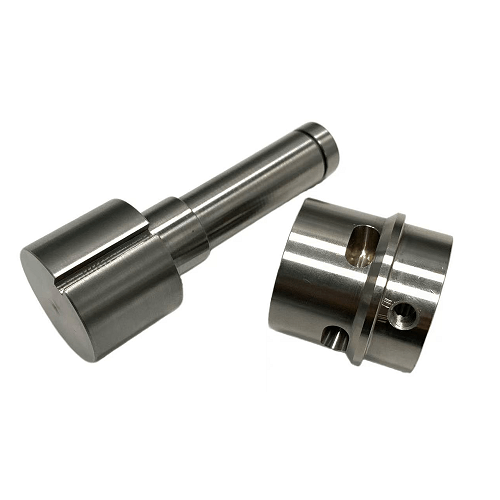
What Is Swiss Turning?
Swiss turning is a specialized CNC machining process that uses a sliding headstock design to move the workpiece through a guide bushing while cutting tools perform machining operations close to the support point.
Unlike conventional CNC turning,where the material is held mainly by a chuck,Swiss CNC machines support the material near the cutting area.This unique structure reduces vibration and improves machining stability,especially when producing small-diameter and long-length components.
The process was originally developed in Switzerland for manufacturing precision watch parts,which is why it is known as"Swiss turning."Today,the technology has expanded into many industries requiring high-quality precision parts.
How Does Swiss CNC Machining Work?
The working principle of Swiss CNC machining is based on a sliding headstock system.
During the machining process:
The raw material bar passes through a guide bushing.
The headstock moves forward and backward along the Z-axis.
Cutting tools operate close to the guide bushing support point.
Multiple tools can perform turning,drilling,milling,and threading operations simultaneously.
The finished component is automatically produced with high precision.
This design allows Swiss turning machines to maintain excellent rigidity and accuracy,even when machining very small or delicate components.
Key Advantages of Swiss Turning
1.High Precision and Tight Tolerances
One of the biggest advantages of Swiss cnc turning is its ability to achieve extremely high accuracy.The close support between the guide bushing and cutting area minimizes deflection,allowing manufacturers to produce parts with tight dimensional requirements.
This makes Swiss turning ideal for applications where precision is critical.
2.Excellent Machining Stability
Small and long components are often difficult to machine because vibration can affect surface quality and accuracy.Swiss turning machines solve this problem by keeping the cutting force close to the support point.
As a result,manufacturers can achieve better surface finishes and consistent part quality.
3.Efficient Production of Complex Parts
Modern Swiss CNC machines often combine multiple machining functions,including:
Turning
Milling
Drilling
Threading
Grooving
Tapping
This multi-function capability reduces the need for secondary operations and improves overall production efficiency.
4.Suitable for Small and Micro Components
Swiss turning is especially effective for manufacturing small precision parts.Common components include:
Medical screws
Surgical instruments
Electronic connectors
Sensor parts
Watch components
Micro shafts
For industries requiring miniature components,precision Swiss machining provides an efficient and reliable manufacturing solution.
Applications of Swiss Turning
Due to its high accuracy and flexibility,Swiss turning is widely used across various industries.
Medical Industry
Medical manufacturers rely on Swiss CNC machining for producing complex medical components such as surgical tools,implants,and dental parts.These applications require strict quality control and precise dimensions.
Aerospace Industry
Aerospace components must meet demanding requirements for strength,reliability,and accuracy.Swiss turning is commonly used for producing lightweight and precision aerospace parts.
Automotive Industry
Automotive systems use many small precision components,including connectors,fuel system parts,and sensor components.Swiss turning helps manufacturers achieve consistent quality in large-scale production.
Electronics Industry
Electronic devices often require tiny,accurate components.Swiss CNC machining is suitable for producing connectors,pins,housings,and other miniature parts.
Swiss Turning vs Traditional cnc turning
Although both processes use CNC technology,there are important differences.
| Feature | Swiss Turning | Traditional CNC Turning |
|---|
| Workpiece Support | Guide bushing support | Chuck support |
| Precision | Extremely high | High |
| Best For | Small, complex parts | Larger components |
| Vibration Control | Excellent | Moderate |
| Production Efficiency | High for precision parts | Good for general machining |
For manufacturers producing small,complex,and high-volume components,Swiss turning often provides better performance.
What Materials Can Swiss Turning Machine?
Swiss CNC machining can process a wide range of materials,including:
Stainless steel
Aluminum
Brass
Copper
Titanium
Plastic materials
Alloy steels
Material selection depends on the application requirements,including strength,corrosion resistance,weight,and operating environment.
How to Choose a Swiss Turning Manufacturer?
When selecting a Swiss turning manufacturer,companies should consider:
Manufacturing Capability
Check whether the supplier has advanced Swiss CNC machines and experience producing complex precision parts.
Quality Control
Reliable manufacturers should provide strict inspection processes to ensure accuracy and consistency.
Customization Support
A professional supplier should offer OEM and custom machining services according to specific drawings and requirements.
Industry Experience
Experience in industries such as medical,aerospace,and electronics indicates strong technical capability.
Swiss turning is one of the most advanced solutions for precision component manufacturing.With its superior stability,high accuracy,and ability to produce complex miniature parts,Swiss CNC machining has become an important technology across medical,aerospace,automotive,and electronics industries.
For companies seeking reliable precision components,working with an experienced Swiss turning supplier can provide high-quality machining solutions,improved production efficiency,and consistent product performance.
FAQ
Q1:What is the difference between Swiss turning and CNC turning?
Swiss turning uses a sliding headstock and guide bushing system to support the material close to the cutting area,providing higher precision for small and complex parts.Traditional CNC turning is better suited for larger and simpler components.
Q2:What parts are suitable for Swiss turning?
Swiss turning is ideal for small,precise components such as medical parts,electronic connectors,miniature shafts,automotive components,and aerospace parts.
Q3:Is Swiss CNC machining more expensive?
Swiss machining may have higher equipment costs,but it can reduce secondary operations and improve efficiency when producing complex precision parts.
Q4:Can Swiss turning support custom OEM production?
Yes.Many custom Swiss turning parts manufacturers provide OEM machining services based on customer drawings,materials,and specifications.