In modern precision manufacturing,choosing between 5 axis CNC machining and 3 axis CNC machining is a key decision that directly affects production efficiency,cost,and part quality.While both technologies are widely used in metal and plastic processing,they serve very different manufacturing needs.
Understanding the differences helps engineers,buyers,and production managers select the right machining strategy for their projects,especially in industries requiring high accuracy and complex geometries.
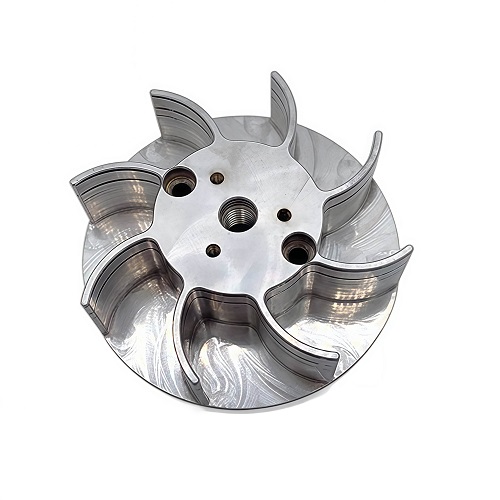
What Is 3 Axis CNC Machining?
A 3 axis CNC machine operates along three linear directions:X,Y,and Z.The cutting tool moves up and down,left and right,and forward and backward to shape the material.
This type of machining is widely used because it is simple,cost-effective,and reliable for basic parts.
Typical applications include:
Flat components
Simple brackets
Basic mechanical parts
Standard molds
3 axis machining is often the first choice for general manufacturing where geometry is not overly complex.
What Is 5 Axis CNC Machining?
A 5 axis CNC machine adds two additional rotational movements to the standard X,Y,and Z axes.This allows the cutting tool or workpiece to rotate and tilt,enabling machining from virtually any angle.
This advanced system is the foundation of 5 axis CNC machining,which is widely used in high-precision industries.
Key advantages include:
Ability to machine complex geometries in a single setup
Higher precision and tighter tolerances
Reduced need for repositioning
Improved surface finish quality
Faster production cycles
Modern manufacturers increasingly rely on 5 axis CNC Machining Services to handle advanced components that 3 axis machines cannot efficiently produce.
Key Differences Between 3 Axis and 5 Axis CNC Machining
1.Complexity of Parts
3 Axis:Suitable for simple and flat parts
5 Axis:Ideal for complex curved surfaces and 3D geometries
2.Setup Time
3 Axis:Requires multiple setups for complex parts
5 Axis:Often completes machining in a single setup
3.Precision
3 Axis:Good accuracy for basic applications
5 Axis:Higher precision due to reduced repositioning errors
4.Production Efficiency
3 Axis:Slower for complex parts
5 Axis:Faster and more efficient for advanced machining
5.Cost
3 Axis:Lower initial cost
5 Axis:Higher investment but better long-term efficiency
Applications Across Industries
Both machining methods are essential in modern production,but their usage depends on industry requirements.
Aerospace Industry
Aerospace components often require 5 axis milling machines due to their complex aerodynamic shapes and strict precision standards.
Automotive Industry
Engine parts,transmission components,and performance parts often use both 3 axis and 5 axis machining depending on complexity.
Medical Industry
Surgical instruments and implants rely heavily on 5 axis CNC machining services for precision and smooth surface finishing.
Mold and Tool Making
3 axis machines are used for simpler molds,while 5 axis machines handle complex cavity designs.
Industrial Equipment
Both technologies are used depending on part geometry and production volume.
Why Manufacturers Are Moving Toward 5 Axis CNC Machining
In recent years,more companies are upgrading to 5 axis CNC machining due to increasing demand for precision and efficiency.The ability to complete complex parts in a single setup significantly reduces human error and production time.
Additionally,5 axis CNC machining services help manufacturers:
As industries continue to evolve,the demand for advanced machining solutions continues to grow.
The choice between 5 axis CNC machining vs 3 axis CNC machining depends on part complexity,budget,and production requirements.While 3 axis machines remain essential for basic and cost-sensitive production,5 axis systems offer unmatched flexibility and precision for advanced manufacturing.
For companies producing complex,high-value components,investing in 5 axis CNC machining services or working with a professional provider using a 5 axis milling machine can significantly improve competitiveness and product quality.
FAQ
Q1:Is 5 axis CNC machining better than 3 axis?
A:It depends on the application.5 axis machining is better for complex and high-precision parts,while 3 axis is more cost-effective for simple parts.
Q2:Why is 5 axis CNC machining more expensive?
A:Because it uses more advanced equipment,reduces setup time,and can produce complex geometries in one operation.
Q3:Can all parts be made with a 5 axis CNC machine?
A:Technically yes,but simple parts are often more cost-efficient to produce with 3 axis machines.
Q4:Which industries benefit most from 5 axis CNC machining services?
A:Aerospace,automotive,medical,and precision engineering industries benefit the most.