


Material selection is one of the most important decisions when producing CNC machining parts. The material affects the finished component's strength, weight, corrosion resistance, machinability, dimensional stability, surface finish, and manufacturing cost.
With many metals and engineering plastics available for CNC machining, choosing a material based only on price or strength can lead to unnecessary manufacturing difficulties. A more practical approach is to start with the part's application and then compare the properties required for the working environment.
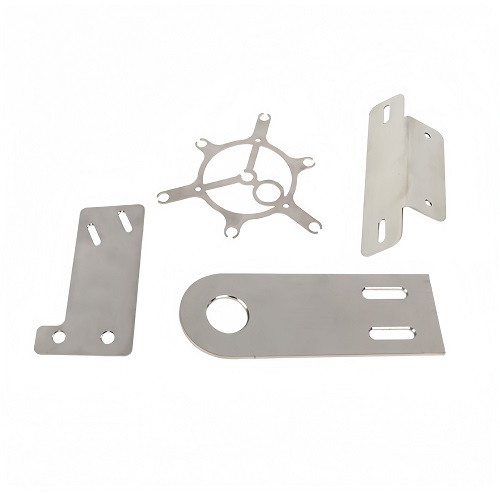
1. Start With the Application Requirements
Before selecting a material, define what the machined component needs to withstand during operation. A part used as a lightweight equipment bracket may have completely different requirements from a shaft exposed to continuous friction.
Consider the following factors:
Required mechanical strength
Part weight
Operating temperature
Corrosion and chemical exposure
Wear and friction
Electrical conductivity or insulation
Thermal conductivity
Required surface finish
Expected service life
Once these requirements are identified, the number of suitable material options can usually be reduced significantly.
2. Aluminum CNC Machining Materials
Aluminum is widely used for CNC machined components because it combines relatively low weight with good machinability and useful mechanical properties. It can also be processed with various surface treatments, including anodizing.
Common aluminum alloys include 6061 and 7075, although the appropriate grade depends on the application.
When Is Aluminum Suitable?
Lightweight structural components
Equipment housings
Brackets and fixtures
Heat dissipation components
Prototypes and general industrial parts
Aluminum can be a practical option when weight reduction and machining efficiency are important. However, the specific alloy and temper should be confirmed according to the required strength and application conditions.
3. stainless steel CNC Machining Materials
Stainless steel is commonly selected when corrosion resistance, durability, and mechanical performance are important. Different stainless steel grades have different properties, so simply specifying "stainless steel" may not provide enough information for production.
Stainless steel CNC parts can be used in equipment, fixtures, shafts, housings, food-processing machinery, chemical equipment, and other industrial applications.
When selecting a stainless steel grade, consider the actual exposure conditions, required mechanical properties, machining requirements, and surface finish.
4. Carbon Steel and Alloy Steel
Steel can be selected for CNC Machining Parts that require high strength, rigidity, or wear resistance. Carbon steel provides a range of options for general mechanical components, while alloy steels can offer enhanced properties for more demanding applications.
Some steel components may also undergo heat treatment after machining. Heat treatment can change hardness and mechanical performance, but it may also affect machining strategy, dimensional stability, and subsequent finishing requirements.
For this reason, the required material grade and heat treatment condition should be defined clearly before production.
5. Brass and Copper
Brass and copper are useful materials for applications where electrical or thermal conductivity is important. Brass can also offer good machinability and is commonly used for fittings, connectors, bushings, and precision components.
Copper provides high electrical and thermal conductivity, making it useful for electrical components, heat transfer applications, and selected industrial parts.
However, copper and its alloys can behave differently during machining compared with aluminum or steel. The material grade should therefore be considered together with the required geometry and surface finish.
6. Titanium for Demanding Applications
Titanium combines high strength with relatively low density and good corrosion resistance. It can be considered for applications where weight, strength, and environmental resistance are important.
Typical applications can include aerospace components, medical equipment components, robotics, and specialized industrial parts.
Compared with easier-to-machine materials such as aluminum, titanium generally requires more careful process planning. Tool selection, cutting conditions, heat management, and machining strategy should therefore be considered before production.
7. Engineering Plastics for CNC Machining
CNC machining is not limited to metals. Engineering plastics can be used when low weight, electrical insulation, low friction, chemical resistance, or other specialized properties are required.
POM
POM is known for good dimensional stability, low friction, and relatively good machinability. It can be used for gears, bushings, rollers, guides, and other mechanical components.
Nylon
Nylon can be considered for wear-resistant components, spacers, rollers, gears, and other applications where a combination of strength and reduced weight is required. Moisture absorption should be considered when dimensional stability is critical.
PTFE
PTFE provides low friction and strong chemical resistance. It can be useful for seals, insulating components, and low-friction parts, although its softness and dimensional behavior should be considered during design.
PEEK
PEEK is a high-performance engineering plastic used in applications requiring a combination of temperature resistance, chemical resistance, mechanical performance, or electrical insulation. Its higher material cost means it is generally selected when its specific properties are required.
8. Consider Machinability
A material may meet the required performance specifications but still create manufacturing challenges. Hardness, toughness, thermal conductivity, work hardening, and material behavior during cutting can affect machining speed, tool wear, surface finish, and production time.
For example, a material that is difficult to machine may require slower cutting parameters, specialized tooling, additional finishing passes, or more careful process control.
Therefore, material selection should consider both how the finished part will perform and how efficiently it can be manufactured.
9. Consider Tolerance and Dimensional Stability
Material properties can influence dimensional accuracy during CNC machining. Thermal expansion, material stiffness, hardness, and internal stresses can all affect how a component behaves during material removal.
Thin-wall components and large parts can be particularly sensitive to deformation. Engineering plastics may also require additional consideration because their dimensional behavior can change with temperature and moisture.
If a part contains critical mating features, bearing seats, sealing surfaces, or precision locating holes, discuss the material and tolerance requirements with the CNC machining supplier before production.
10. Consider Surface Treatment and Secondary Processing
The selected material should also be compatible with the required post-processing. Different materials have different options for anodizing, plating, passivation, polishing, coating, or heat treatment.
For example, aluminum components are commonly considered for anodizing, while stainless steel parts may undergo passivation. Steel components may require heat treatment or protective coatings depending on the application.
When requesting a quotation, specify the base material and the desired secondary process together. This allows the supplier to evaluate the complete production route rather than only the machining operation.
11. Compare Material Cost With Total Manufacturing Cost
The lowest material price does not always result in the lowest finished-part cost. Material price is only one component of the overall manufacturing cost.
A material can affect:
Raw material cost
Machining speed
Tool consumption
Machining cycle time
Finishing requirements
Inspection requirements
Heat treatment
Production lead time
For this reason, material alternatives should be compared based on the finished component and its required performance rather than material price alone.
12. Confirm the Exact Material Grade
One of the common mistakes in CNC machining projects is providing only a broad material category. Terms such as aluminum, stainless steel, or plastic can describe multiple grades with different properties and machining behavior.
A purchasing specification should identify the exact material grade whenever the application requires specific mechanical or chemical properties. If an alternative grade is acceptable, it can be listed separately so the supplier can evaluate its effect on cost and production.
Conclusion
Choosing materials for CNC machining parts should begin with the application rather than the material catalog. Strength, weight, corrosion resistance, temperature, wear, conductivity, machinability, dimensional stability, surface treatment, and total manufacturing cost should all be considered.
Aluminum, stainless steel, carbon steel, alloy steel, brass, copper, titanium, and engineering plastics can all be suitable for different CNC machining applications. The right choice depends on the specific requirements of the finished component.
By clearly defining the application and communicating the material grade, tolerances, surface finish, and production requirements to the machining supplier, engineers and purchasing teams can reduce unnecessary material changes and establish a more reliable manufacturing process.