


Choosing the right CNC machining parts is an important step when developing mechanical equipment, automation systems, industrial machinery, or custom assemblies. The part needs to match not only the dimensions shown on a drawing, but also the operating environment, mechanical requirements, production quantity, and assembly conditions.
For engineers and purchasing teams, selecting CNC machined components should therefore start with the application rather than simply comparing supplier prices. A clear understanding of the part's function can help determine the appropriate machining process, material, tolerance, surface finish, and production method.
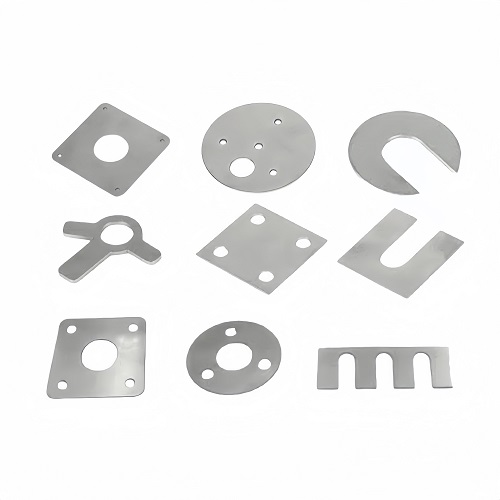
1. Define the Function of the Part
The first step is to understand what the part needs to do inside the final assembly. Different components can have very different requirements even when they have similar dimensions.
For example, a structural bracket may need sufficient strength and rigidity, while a shaft may require accurate diameters and good wear resistance. A housing may place greater importance on dimensional accuracy, mounting features, and surface finish.
Before ordering custom CNC parts, consider questions such as:
What function does the part perform?
What components will it connect to?
Will it carry a static or dynamic load?
Will it experience vibration, impact, or repeated movement?
Does it need to maintain a specific dimensional relationship with other parts?
2. Consider the Operating Environment
The environment where a machined component is used can strongly influence its specifications. Temperature, moisture, chemicals, dust, outdoor exposure, and mechanical wear can all affect material and surface treatment requirements.
For parts used in humid or corrosive environments, corrosion resistance may be an important consideration. Components exposed to high temperatures may require materials with suitable thermal properties. Parts used in moving mechanisms may require good wear resistance and dimensional stability.
Understanding the actual working environment before machining can prevent problems after assembly and reduce the need for later modifications.
3. Select the Appropriate CNC Machining Process
CNC machining can include milling, turning, drilling, boring, threading, and other operations. The geometry of the part normally determines which process or combination of processes is appropriate.
Cnc Milling
CNC milling is commonly used for brackets, housings, plates, fixtures, manifolds, and parts with pockets, slots, holes, and complex profiles. Multi-axis machining can also be used when a component requires features on multiple surfaces.
CNC turning
CNC turning is suitable for cylindrical or rotational components such as shafts, pins, bushings, sleeves, and threaded components. Turning can provide efficient production for parts where the primary geometry is based around a central axis.
Multi-Axis CNC Machining
Complex components may require 4-axis or 5-Axis Machining to reduce setups and reach difficult features. This can be useful when the part contains angled surfaces, deep features, or multiple machining faces.
The machining process should be selected according to the actual geometry rather than automatically choosing the most advanced equipment.
4. Choose a Material That Matches the Application
Material selection directly affects the performance and manufacturability of a CNC part. Common choices include aluminum, stainless steel, carbon steel, alloy steel, brass, copper, titanium, and engineering plastics.
Aluminum is often considered when low weight, good machinability, and corrosion resistance are required. Stainless steel can be suitable for components that need greater corrosion resistance and durability. Brass and copper may be selected when electrical or thermal conductivity is important.
Engineering plastics such as POM, nylon, PTFE, and PEEK can also be CNC machined for applications requiring low friction, electrical insulation, chemical resistance, or reduced weight.
The material should be selected according to the part's actual mechanical and environmental requirements rather than simply choosing the strongest available option.
5. Determine the Required Tolerances
Not every dimension on a CNC machined component needs the same level of precision. Applying tight tolerances to every feature can increase machining time, inspection requirements, and production costs without improving functionality.
Instead, identify the dimensions that are critical to the assembly. Bearing seats, mating surfaces, locating holes, sealing surfaces, and precision shafts may require tighter dimensional control than external surfaces or non-functional features.
When preparing a technical drawing, clearly identify critical dimensions and tolerances. This gives the CNC machining supplier a better understanding of which features require additional process control and inspection.
6. Consider Surface Finish Requirements
Surface finish is another factor that should be considered before production. A standard machined finish may be sufficient for many internal or functional components, while other parts may require additional finishing for appearance, corrosion resistance, wear resistance, or assembly performance.
Common post-processing options for CNC machined parts include:
Anodizing for aluminum components
Electroplating for selected metal parts
Powder coating for protective and decorative purposes
Passivation for stainless steel
Polishing for improved surface appearance
Heat treatment for selected steel and alloy components
The required finish should be specified together with the base material and functional requirements so that the supplier can evaluate the complete manufacturing process.
7. Match the Part Design to Production Quantity
The required quantity can influence the most practical manufacturing strategy. Prototype parts may require flexibility and fast design changes, while repeat production requires greater attention to process consistency, tooling, inspection, and cycle time.
For small batches, CNC machining can provide a flexible solution without the need for dedicated tooling. For larger production quantities, the supplier may optimize fixture design, machining sequences, cutting parameters, and inspection procedures to improve production efficiency.
When requesting a quotation, provide the expected order quantity and whether the project involves prototypes, small-batch production, or recurring orders.
8. Provide Complete Technical Information
A CNC machining supplier needs enough information to evaluate the part accurately. A complete drawing or 3D CAD model can significantly reduce communication problems during quotation and production.
Useful information can include:
2D engineering drawings
3D CAD files
Material grade
Critical dimensions and tolerances
Surface finish requirements
Heat treatment requirements
Surface treatment requirements
Required quantity
Inspection or certification requirements
If alternative materials or manufacturing methods are acceptable, this can also be communicated during the RFQ stage.
9. Evaluate More Than the Unit Price
When comparing CNC machining suppliers, unit price is only one part of the purchasing decision. Manufacturing capability, quality control, material sourcing, inspection procedures, communication, and delivery capability can all affect the overall project result.
A supplier that understands the application can also identify potential manufacturing issues before production begins. For custom components, this type of technical communication can be especially important when the design includes tight tolerances, complex geometry, or multiple finishing processes.
10. Check Quality Control Requirements
Quality inspection should be considered before production rather than after the parts are completed. Depending on the application, inspection may include dimensional measurement, visual inspection, surface inspection, hardness testing, or other verification methods.
For precision components, coordinate measuring machines (CMM) and other inspection equipment can be used to verify critical dimensions and geometric features.
Before placing an order, clarify which dimensions require inspection and whether an inspection report or material certificate is required.
Conclusion
Choosing the right CNC machining parts requires more than matching a drawing with a machining quote. The application, material, machining process, tolerances, surface finish, production quantity, and quality requirements should all be considered together.
A well-defined specification allows suppliers to evaluate manufacturability more accurately and helps purchasing teams compare quotations based on the complete manufacturing requirement. By starting with the function of the part and working backward to its technical specifications, buyers can develop a more practical CNC machining solution for their application.