CNC turning services are advanced machining solutions that use computer-controlled turning machines to manufacture precise cylindrical components.By combining automated control systems with high-speed cutting tools,CNC turning can produce complex parts with excellent accuracy,repeatability,and efficiency.
From automotive shafts and aerospace components to medical devices and industrial machinery parts,CNC turning has become an essential manufacturing method for companies requiring precision CNC machining services.
This article explains how CNC Turning Services work,the machines involved,the machining process,and their common industrial applications.
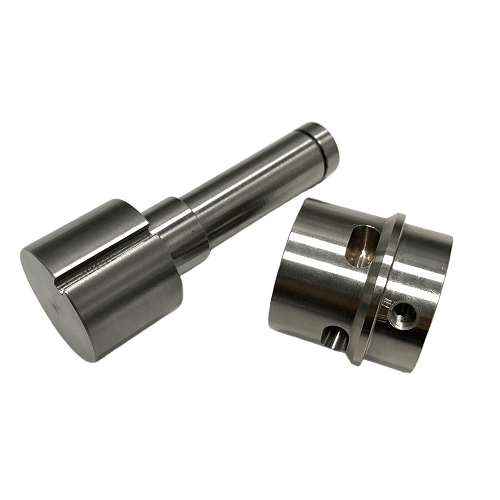
What Is CNC Turning?
CNC turning is a subtractive manufacturing process where a rotating workpiece is cut by stationary cutting tools controlled by a computer program.
Unlike Cnc Milling,where the cutting tool rotates and moves around a fixed workpiece,CNC turning mainly focuses on producing round or symmetrical parts by rotating the material.
A typical CNC turning system includes:
Professional CNC turning manufacturers use these machines to produce high-quality components according to engineering drawings,CAD models,or customer specifications.
How Do CNC Turning Services Work?
The CNC turning process usually includes several important stages.
1.Part Design and CNC Programming
The process starts with a product design created using CAD(Computer-Aided Design)software.
Engineers analyze:
The CAD drawing is converted into CNC programming instructions,commonly known as G-code.
The CNC program controls:
Tool movement direction
Cutting speed
Feed rate
Machining sequence
Cutting depth
This automated programming allows CNC machines to manufacture parts with consistent accuracy.
2.Material Selection and Workpiece Setup
Before machining begins,the appropriate raw material is selected.
Common CNC turning materials include:
Metals:
Aluminum
Stainless steel
Brass
Copper
Titanium
Carbon steel
Plastics:
The material is fixed into the machine using a chuck or fixture.Proper clamping ensures stability during high-speed rotation.
3.Material Cutting and Turning Operation
During CNC turning,the workpiece rotates around its axis while cutting tools remove unwanted material.
The CNC system automatically controls the tool movement to create different features,such as:
Outer diameters
Inner holes
Threads
Grooves
Tapers
Chamfers
Contours
Common CNC turning operations include:
Facing
Creates a flat surface on the end of a workpiece.
External Turning
Reduces the outside diameter of the material to achieve the required size.
Boring
Enlarges existing holes with high precision.
Threading
Creates internal or external threads for screws and connectors.
Grooving
Cuts narrow channels or recesses into the component.
Types of CNC Turning Machines
Different CNC turning machines are selected based on part complexity,production volume,and accuracy requirements.
1.CNC Lathe Machine
A CNC lathe is the most common type of turning equipment.It is suitable for producing:
Shafts
Bushings
Pins
Fasteners
Simple cylindrical parts
It provides reliable performance for both prototype and production machining.
2.CNC Turning Center
A CNC turning center is a more advanced machine equipped with additional functions,including:
Automatic tool changing
Live tooling
Milling capabilities
Multiple-axis control
These machines can perform turning,drilling,and milling operations in one setup,reducing production time.
3.Multi-Axis CNC Turning Machine
Multi-axis CNC turning machines provide greater flexibility for complex components.
Common configurations include:
3-axis CNC turning
4-axis CNC turning
5-axis CNC turning
They are widely used in aerospace,medical,and high-precision industries where complex geometries are required.
CNC Turning Process Flow
A typical CNC turning service follows this workflow:
Step 1:Customer Provides Design
↓
CAD drawing,3D model,or sample part
Step 2:Engineering Review
↓
Material selection,machining method,cost evaluation
Step 3:CNC Programming
↓
Generate machining instructions
Step 4:Machine Setup
↓
Install tools,fixtures,and raw materials
Step 5:CNC Machining
↓
Automatic cutting and shaping process
Step 6:Quality Inspection
↓
Dimensional measurement and performance testing
Step 7:Surface Treatment and Delivery
↓
Finishing processes and shipment
What Are the Advantages of CNC Turning Services?
1.High Precision Manufacturing
CNC turning machines can achieve extremely accurate dimensions,making them suitable for industries requiring strict tolerances.
2.Excellent Repeatability
Once programmed,CNC machines can produce thousands of identical parts with consistent quality.
3.Faster Production Speed
Automation reduces manual operations and improves manufacturing efficiency.
4.Custom Part Capability
CNC turning services can manufacture customized components based on customer drawings or specifications.
5.Cost-Effective Production
For medium and large production runs,CNC turning reduces labor costs and improves overall productivity.
Applications of CNC Turning Services
CNC turning is widely used across many industries.
Automotive Industry
CNC turning is used to manufacture:
Engine components
Transmission shafts
Brake system parts
Fasteners
Bushings
The automotive industry relies on CNC turning for high-volume production and consistent quality.
Aerospace Industry
Aerospace components require lightweight materials and extreme precision.
Common applications include:
Aircraft fittings
Hydraulic components
Precision connectors
Structural components
Medical Industry
CNC turning supports the production of medical precision parts,including:
High accuracy and excellent surface quality are critical for medical applications.
Electronics Industry
CNC turning is used for:
Industrial Machinery
Many industrial machines depend on CNC turned components,such as:
Hydraulic parts
Pneumatic components
Machine shafts
Custom mechanical parts
CNC Turning Services vs CNC Milling Services
| CNC Turning | CNC Milling |
|---|
| Workpiece rotates | Cutting tool rotates |
| Best for cylindrical parts | Best for complex shapes |
| Mainly used for shafts, pins, bushings | Used for slots, pockets, and complex surfaces |
| Faster for round components | Better for multi-dimensional parts |
Many manufacturers combine CNC turning and CNC milling to provide complete machining solutions.
How to Choose a CNC Turning Service Provider?
When selecting a CNC turning supplier,consider the following factors:
1.Equipment Capability
Check whether the supplier has advanced CNC machines suitable for your part requirements.
2.Quality Control
A reliable manufacturer should provide:
3.Material Experience
Choose a supplier experienced with your required materials,especially for difficult-to-machine metals.
4.OEM and Customization Support
Professional CNC turning manufacturers should support:
5.Delivery Capability
A stable production schedule and efficient supply chain ensure timely delivery.
FAQ
1.What parts can be made using CNC turning services?
CNC turning can produce shafts,pins,bushings,screws,connectors,valves,flanges,and many other cylindrical precision components.
2.How accurate is CNC turning?
Precision CNC turning can achieve very tight tolerances,often within±0.01 mm depending on machine capability,material,and design requirements.
3.What is the difference between CNC turning and CNC machining?
CNC turning is a specific type of CNC machining focused on rotating workpieces,while CNC machining is a broader term covering processes such as turning,milling,drilling,and grinding.
4.Can CNC turning services handle custom orders?
Yes.CNC turning manufacturers can produce customized parts based on CAD files,drawings,samples,and technical specifications.
5.Are CNC turning services suitable for small quantities?
Yes.CNC turning is suitable for prototypes,small batches,and large-scale production depending on customer needs.