


Sheet Metal Fabrication is an important manufacturing process used to produce components, enclosures, brackets, frames, panels, covers, and structural parts for industrial equipment. By combining processes such as cutting, bending, punching, welding, and surface finishing, manufacturers can turn flat metal sheets into functional components designed for specific applications.
For industrial manufacturers, sheet metal fabrication provides flexibility in component design, material selection, and production volume. It can support everything from prototypes and small batches to repeat production for industrial equipment and machinery.
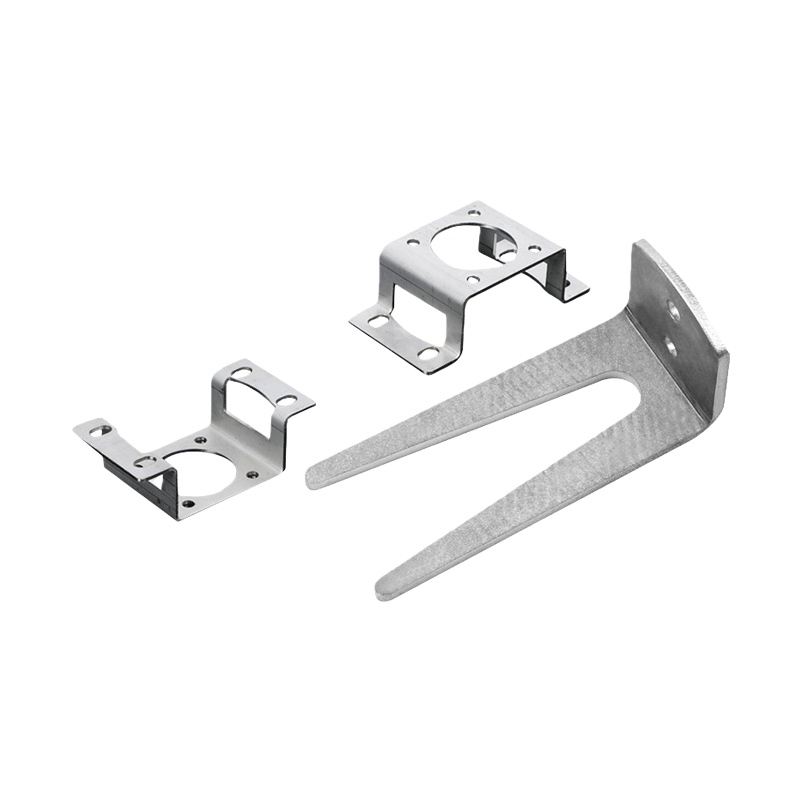
What Is Sheet Metal Fabrication?
Sheet metal fabrication refers to a group of manufacturing processes used to transform metal sheets into finished or semi-finished components. Depending on the product design, fabrication may involve several processes from a single sheet of material to the completed part.
Common sheet metal fabrication processes include:
Laser Cutting: Cuts sheet metal into precise shapes according to digital drawings.
CNC Punching: Creates holes, slots, and other geometric features.
CNC Bending: Forms flat sheets into angles, channels, boxes, and other three-dimensional structures.
Welding: Joins multiple metal components into assemblies or structural parts.
Deburring: Removes sharp edges and unwanted material left after cutting.
Surface Finishing: Improves appearance, corrosion resistance, or surface performance according to application requirements.
1. Producing Structural Components for Industrial Equipment
Industrial machinery often requires a combination of structural and functional metal components. Sheet metal fabrication can be used to manufacture equipment frames, support brackets, mounting plates, protective covers, access panels, and other fabricated parts.
By controlling material thickness, bending angles, dimensions, and joining methods, manufacturers can develop components that meet the mechanical requirements of specific equipment.
2. Manufacturing Electrical and Control Enclosures
Sheet metal is widely used for electrical cabinets, control boxes, instrument enclosures, and protective housings. Fabrication processes allow manufacturers to create openings for switches, displays, cables, connectors, ventilation components, and mounting hardware.
The enclosure design can be adapted according to the equipment layout and installation environment. Material selection and surface treatment can also be adjusted according to requirements such as corrosion resistance and indoor or outdoor use.
3. Supporting Custom Equipment Design
Industrial equipment manufacturers often need components with specific dimensions or mounting structures that are not available as standard parts. Custom sheet metal fabrication provides a practical way to produce these components based on engineering drawings, CAD files, or physical samples.
A custom fabrication project can include different materials, thicknesses, hole patterns, bends, cutouts, welding structures, and finishing requirements.
This flexibility is particularly useful when machinery manufacturers are developing new equipment or modifying existing systems.
4. Supporting Prototype and Small-Batch Production
Before mass production, manufacturers may need prototypes to verify dimensions, assembly, functionality, and overall design. Sheet metal fabrication can support prototype production without requiring the same tooling approach used for some high-volume manufacturing processes.
After testing the prototype, engineers can make adjustments to the sheet thickness, bend position, hole location, or overall structure before moving into repeat production.
5. Enabling Different Material Options
Industrial fabrication projects may require different metals depending on the operating environment and functional requirements.
Common sheet metal materials include:
Carbon Steel: Commonly selected for structural and general industrial components.
stainless steel: Suitable for applications requiring corrosion resistance and a durable surface.
Aluminum: Useful when low weight and corrosion resistance are important considerations.
Galvanized Steel: Used in applications where additional corrosion protection is required.
Copper: Selected for certain electrical and thermal applications.
The appropriate material depends on factors such as strength, weight, corrosion exposure, conductivity, operating environment, and budget.
6. Integrating Multiple Fabrication Processes
A major advantage of sheet metal fabrication is that multiple processes can be combined to produce a complete component or assembly.
For example, an industrial enclosure may require laser cutting for the main panels, CNC bending to form the enclosure structure, welding to join components, and powder coating for the final surface finish.
Integrating these processes into one manufacturing workflow can simplify production coordination and help maintain consistency between different components.
7. Supporting Different Production Volumes
Industrial manufacturing requirements vary from one project to another. Some customers need a small number of prototypes, while others require recurring production of hundreds or thousands of components.
Custom sheet metal fabrication can be adapted to different production requirements. Production planning, material sourcing, processing methods, inspection procedures, and packaging can all be adjusted according to order quantity and product complexity.
8. Improving Manufacturing Flexibility
Industrial equipment designs may change as products are upgraded or production requirements evolve. Fabrication based on digital drawings allows manufacturers to modify dimensions, openings, mounting points, and other design features without completely redesigning the entire production process.
This flexibility can be useful for OEM projects, equipment upgrades, replacement components, and customized machinery.
9. Supporting Surface Protection and Product Appearance
Sheet metal components may require surface finishing after fabrication. Common options include powder coating, painting, anodizing, plating, polishing, and brushing, depending on the material and application.
Surface treatment can improve the appearance of a component while also providing protection against environmental exposure. The appropriate finish should be selected according to the base material and intended operating conditions.
10. Maintaining Dimensional and Assembly Requirements
Industrial components often need to fit with other parts during assembly. Cutting accuracy, bending accuracy, hole positioning, and dimensional inspection therefore play important roles in sheet metal fabrication.
For components with tighter dimensional requirements, manufacturers may use CNC equipment, inspection tools, gauges, and documented quality-control procedures to verify the finished parts against engineering drawings.
Where Is Sheet Metal Fabrication Used in Industrial Manufacturing?
Custom sheet metal components can be found across many industrial sectors, including:
Industrial machinery
Electrical and electronic equipment
Control cabinets and enclosures
Material handling equipment
HVAC equipment
Energy equipment
Transportation equipment
Commercial and industrial equipment
The specific fabrication process and material selection should be determined according to the component's function and working environment.
How to Choose a Sheet Metal Fabrication Supplier?
For industrial manufacturing projects, choosing a capable fabrication supplier is important for maintaining product quality and production consistency. Buyers should evaluate factors such as:
Available cutting, bending, punching, and welding equipment
Material sourcing capabilities
Dimensional inspection procedures
Prototype and small-batch production capabilities
Surface finishing options
Production capacity
Experience with custom engineering drawings
Quality control and delivery management
A supplier capable of handling multiple fabrication processes can also simplify communication and production management for OEM customers.
Conclusion
Sheet metal fabrication supports industrial manufacturing by providing flexible solutions for producing equipment structures, enclosures, brackets, panels, frames, and other custom components. Through cutting, bending, punching, welding, and surface finishing, manufacturers can produce parts according to specific engineering and application requirements.
For OEMs and industrial equipment manufacturers, custom sheet metal fabrication can support product development, prototyping, small-batch production, and ongoing manufacturing programs.
Looking for custom sheet metal fabrication for your industrial project? Contact us with your drawings, material requirements, dimensions, and production quantity to discuss your fabrication needs.